
Calhoun Projected Versus Actual Release
A projection is a planning date. It is not the time a door will open. For a Florida state prisoner, FDC calculates dates from the judgment, jail and prison credit, sentence structure, gain-time awards or forfeitures, and other controlling events. The public profile uses the label Current Release Date. Florida Statute section 944.275 uses tentative release date for the calculated gain-time projection. Those terms should be kept distinct.
An actual release is a completed departure shown in an incarceration or release history, jail transaction, or receiving-agency record. Even then, departure can mean transfer. A person can leave Calhoun County Jail for FDC, another county, USMS, or ICE rather than the community. A state prisoner can leave prison and begin conditional release, probation, or another form of supervision. Actual physical release and final legal discharge are separate events.
Pretrial detention follows a different path. A person awaiting trial has not received a sentence-based completion date. Bond posting, recognizance, dismissal, a release order, case resolution, or a hold from another agency can control when custody changes. The Calhoun court docket explains the legal event, while CCSO’s release transaction supplies the actual jail exit or handoff.
Find a Calhoun Release Date
Start with the custody type. The FDC Offender Search is for Florida state custody and specified state supervision records. It is not a Calhoun County Jail sentence calculator. A person who bonded out locally and never entered FDC may have no state incarceration record. Likewise, a Calhoun County defendant may serve in an FDC institution outside the county.
- Check the Calhoun County Jail Log only to see whether the person is currently displayed. Save the jail number, booking date, charge, and case identifiers if present.
- For a county detainee or county sentence, search the Calhoun Clerk case for the judgment, sentence, jail credit, bond order, or later amendment.
- Call CCSO at 850-674-5049 for the controlling jail calculation. Ask whether the displayed projection applies to the whole custody episode or only one charge.
- For a state prisoner, search FDC by the six-character DC number when known. Otherwise use the full name and compare birth, sentence, county, and case information.
- Read Current Status, Current Release Date, prison sentence history, detainers, and incarceration history together. An old Calhoun CI entry is not proof of current placement.
- After the date passes, recheck the current status and date-out history. Use FDC public records when the calculation or completed event needs official clarification.
The current-inmate interface explains the scope of the state search. The official FDC inmate search is shown below.
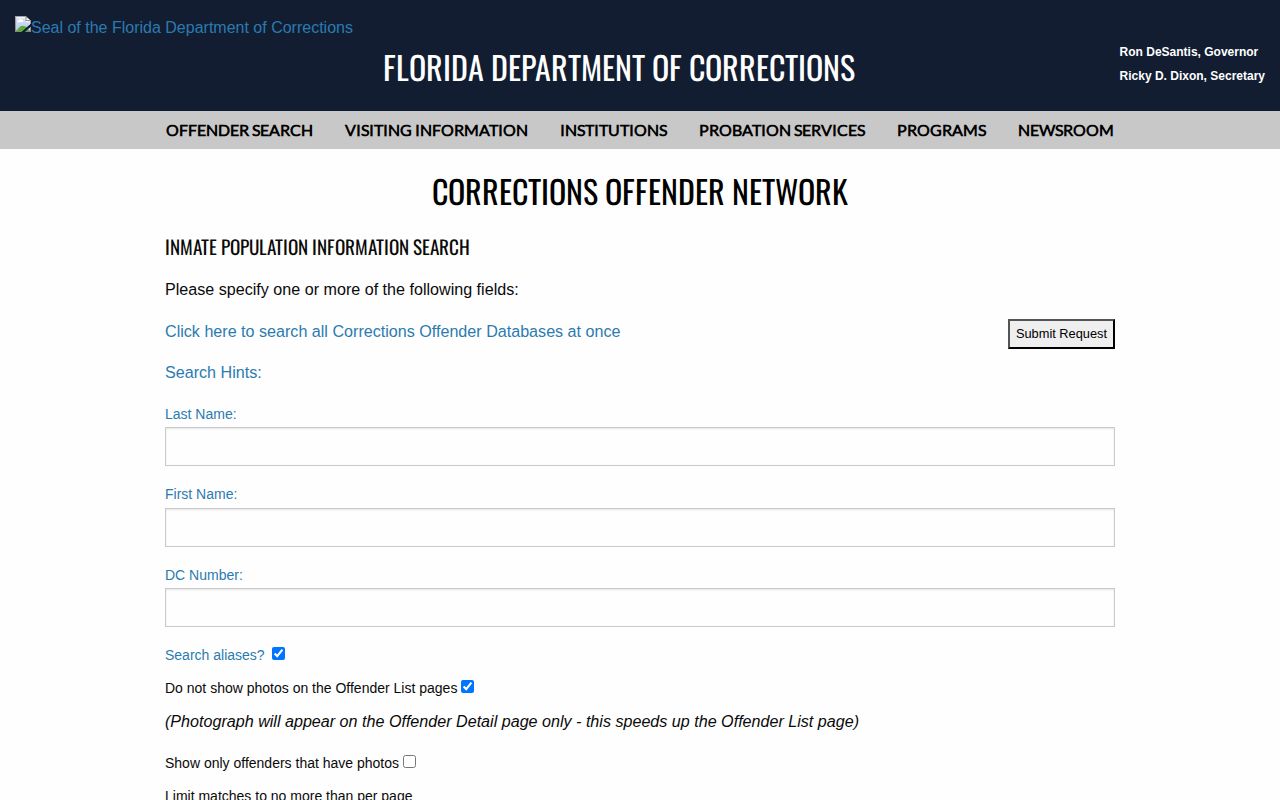
The scope warning helps keep county jail projections separate from statewide prison dates.
The full named-person path for a prior release, including court and custodian checks, is on the Calhoun County released-inmate search page.
Note: The live jail roster can show a projection on a charge, but it does not prove the person has left custody.
Calhoun FDC Release Date Terms
Florida law uses precise terms. The sentence imposed comes from the judgment. The maximum sentence expiration date under section 944.275(2) reflects expiration of the imposed sentence or combined sentences after lawful credit. The tentative release date under section 944.275(3) is the date projected through gain-time granted or forfeited. The public FDC record’s Current Release Date is a reader-facing field that must be interpreted in that legal context.
A Current Release Date field may not always contain a calendar date. For example, a life sentence can display “SENTENCED TO LIFE.” That is why copying a field label without the value and current status can mislead. The detail record can also contain sentence history, incarceration events, and detainers that affect how the value is read.
The official FDC example record demonstrates the exact field layout.
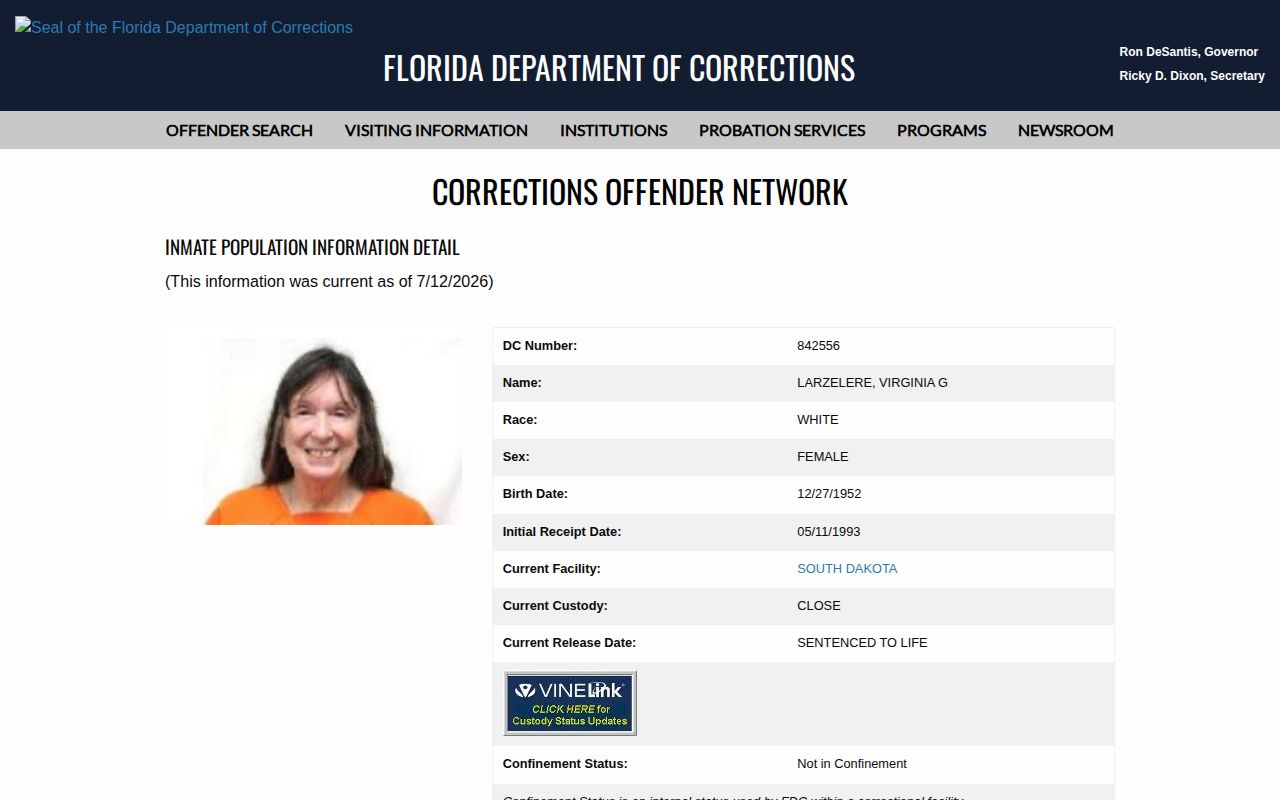
The example shows why the profile value, statutory projection, and actual release history should never be collapsed into one generic date.
- Maximum sentence expiration
- The imposed term after lawful custody credit, without treating gain-time projection as final.
- Tentative release date
- FDC’s statutory projection based on gain-time granted or forfeited.
- Current Release Date
- The exact public profile label, which requires the record’s status and sentence context.
- Detainer
- A request or hold from another authority that can affect the final handoff.
Calhoun State Gain-Time Rules
Florida Statute section 944.275 governs the state calculation. Qualifying prisoners may receive incentive gain-time for satisfactory behavior and productive activity under the statute and FDC rules. Offense date, offense category, sentence type, disciplinary history, and other limits all matter. Gain-time can be awarded, forfeited, restored, or deleted, so the projection can move in either direction.
For offenses within the post-October 1, 1995 framework, section 944.275(4)(f) generally prevents gain-time from producing release before service of at least 85 percent of the imposed sentence. Court-awarded credit for physical incarceration counts toward that service floor. Life sentences and statutory exclusions require separate treatment. Multiplying every sentence by 0.85 does not produce a reliable release date.
Florida Statute section 944.291 addresses release after the term less lawful gain-time and potential further supervision. Conditional-release review may occur before the tentative release date for qualifying people. Thus, the projected date does not answer whether all supervision will end.
The source statute displays the calculation framework directly.
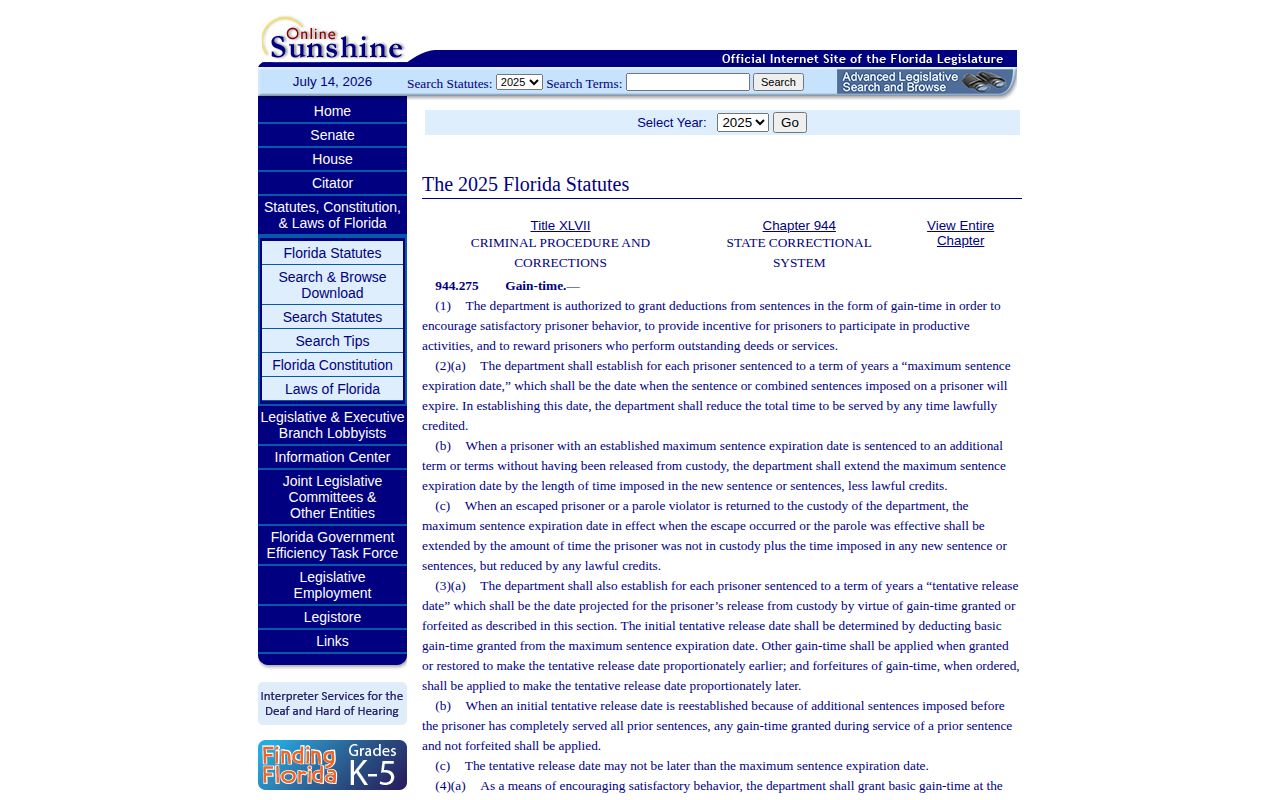
The statute supplies the controlling terms, but FDC applies them to the person’s actual sentence and credit record.
Calhoun County Jail Good Time
County prisoners fall under a separate statute. Florida Statute section 951.21 authorizes good-conduct deductions unless the county commission changes or discontinues the policy by majority vote. The statute describes deductions up to five days per month in the first and second years, up to ten days in the third and fourth years, and up to fifteen days in later years when no sustained misconduct exists. It also permits extra gain-time for diligence or exceptional service and allows forfeiture under its process.
Those maximums are not a Calhoun release-date formula. CCSO must apply the court sentence, jail credit, current local policy, earned awards, misconduct findings, and any other cases or holds. A projected value in the roster may relate to one displayed charge rather than the person’s entire custody status. Ask the jail for the controlling calculation and request the existing calculation record if needed.
The official county-prisoner statute can be reviewed at its Florida Legislature source.
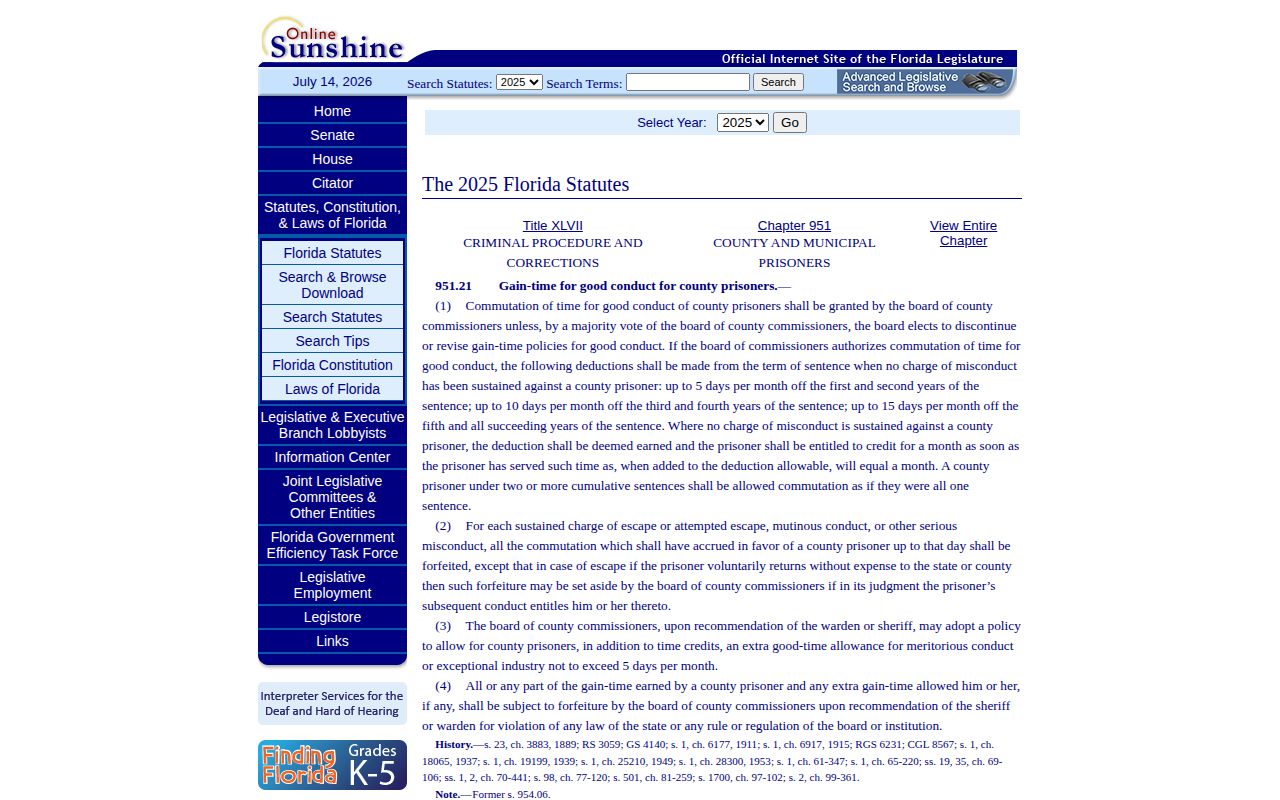
Local application and the person’s record remain essential even when the statute supplies the statewide authority.
Note: No Calhoun-specific weekend, holiday, or fixed release-time policy was identified, so do not shift a date by assumption.
Why Calhoun Release Dates Change
A date can change before release because the inputs are not fixed. Some events alter the sentence calculation itself. Others leave the sentence intact but change when or where the person is handed off. The current profile, court docket, and release history should be checked again after any major event.
| Factor | Possible effect | Verification source |
|---|---|---|
| Gain-time award or restoration | May move a tentative state date earlier within statutory limits | FDC calculation and section 944.275 |
| Gain-time forfeiture | May move the state projection later | FDC disciplinary and sentence records |
| Corrected jail credit | Can change maximum expiration and projected dates | Amended judgment, court docket, and agency record |
| New or amended sentence | May add time or change concurrent and consecutive structure | Sentencing court and FDC sentence history |
| Detainer or warrant | Can change a community release into a custodial transfer | Holding agency and receiving authority |
| Parole or conditional-release action | Can affect release mechanism and later supervision | FCOR action and FDC record |
| Escape or supervision violation | Can interrupt credit or lead to later custody action | FDC, FCOR, and court records |
A detainer deserves special care. The sentence date can remain unchanged while another authority takes custody at the end of that term. That event is not a walk-out release. Ask CCSO or FDC for the destination and then follow the receiving system.
Calhoun Current Versus Tentative Date
Calhoun release-date research has a distinctive wording trap. FDC publishes Current Release Date, while the controlling gain-time law uses tentative release date. An award or restoration can move the statutory projection earlier. A forfeiture, corrected sentence, or added sentence can move it later. Neither term promises an exact exit time.
The 85 percent rule is another common source of error. It is a floor within a defined post-1995 framework, not a shortcut for all Florida sentences. Court credit can count toward the floor, while life terms and exclusions follow different rules. The safest reading preserves the public field as written, identifies the relevant statute, and waits for a date-out event before calling the release complete.
Confirm a Calhoun Actual Release
Reopen the source record on or after the projection. For FDC, look for a changed Current Status and an incarceration history entry with a date out and release type. Review supervision history at the same time. If the public fields conflict or remain unclear, use FDC Public Records and provide the DC number, full name, and exact date or field needing clarification.
For Calhoun County Jail, call 850-674-5049 or make a narrow chapter 119 request for the actual release date and time, disposition, and receiving agency when transferred. The Sheriff’s jail address is 20776 Central Avenue East, Blountstown, FL 32424-2276. Call to confirm delivery instructions. The Clerk docket can explain the bond or court order, but CCSO documents the physical exit.
Florida VINE can send covered status alerts. Notification supports follow-up but does not replace the source release record. The Calhoun VINELink inmate search explains the one-person notification route.