
Calhoun Parole and Probation Compared
Probation is usually part of a sentence imposed by a court. It may follow a jail term, replace confinement, or run with other court conditions. Parole is a discretionary form of release granted by the Florida Commission on Offender Review, known as FCOR, to a limited parole-eligible population. Florida ended ordinary parole for most newer offenses, so a modern state-prison release should not be called parole unless the official record uses that term.
Other labels matter too. Community control is a highly structured form of supervision in the community. Conditional release is a statutory post-prison supervision term for certain people and is not the same as probation or parole. FDC Community Corrections administers field supervision for state cases. County probation and pretrial supervision use a separate local route. The order or offender record controls, not a guess based on where the person lives.
| Status | Who imposes it | Best verification source |
|---|---|---|
| Probation | A sentencing court | Court order and FDC supervised-population record when FDC administers it |
| Parole | FCOR for an eligible person | FDC record plus the FCOR final action or order |
| Community control | A sentencing court | Court order, FDC record, and assigned Community Corrections office |
| Conditional release | Statutory process under FCOR authority | FDC supervision history and FCOR release action |
The custody record and supervision record should be read together. A state-prison history can show physical release while the supervised-population record remains active. Likewise, a person released on bond from Calhoun County Jail may have court conditions without appearing in FDC’s state-prison history.
- Parole
- Discretionary release before sentence expiration for a person who is legally eligible.
- Probation
- Court-ordered supervision in the community as part of a sentence.
- Discharge
- The formal end of the supervision term, not merely release from a facility.
- Absconder
- A system status indicating a supervised person is not reporting as required.
Verify Calhoun Post-Release Supervision
The official starting point is the FDC Supervised Population Information Search. Search with the six-character DC number when available. A full legal name can also work, but matching names require care. Compare identity, offense county, case data, supervision type, start and end dates, current status, and the office shown. A county-jail booking number is not a DC number.
- Determine whether the person left Calhoun County Jail, an FDC prison, or another custodian. The source changes with the custody system.
- Search the FDC supervised-population database by DC number or name. Open the detail that matches the case and identity.
- Read the exact supervision type and status. Do not replace “conditional release,” “probation,” or “parole” with a broader label.
- Note the assigned office and listed dates. Use the Community Corrections directory to confirm current contact information.
- Check the Calhoun Clerk case docket when the supervision began by court order. The docket can show the judgment, probation order, later modification, or violation filing.
- Call the official office with the DC number if the public record is unclear or current reporting status must be confirmed.
The search covers specified FDC supervision records. It does not include every local pretrial or county probation arrangement. For county-level status, use the order in the Calhoun court-record portal and the county probation contact shown in that order. The broader Calhoun County release search path is available on the released-inmate records home page.
The official supervised-population screen shows why supervision needs its own lookup. The FDC search source is pictured below.
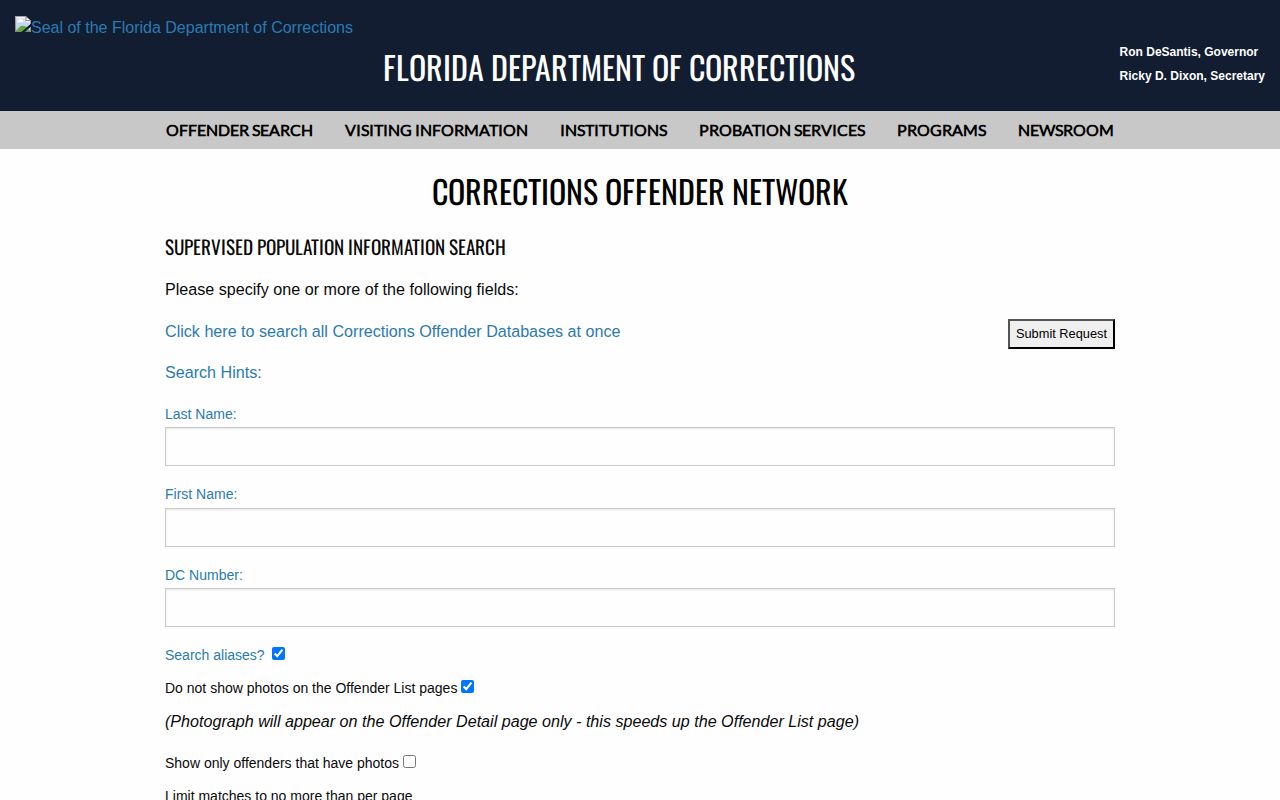
This search separates active field supervision from past prison confinement and helps identify the office tied to the record.
Note: A projected end date is not a discharge; confirm that the status changed and the supervision history records completion.
Calhoun Supervision Office Routes
Calhoun County has distinct county and state supervision channels. County Probation and Pretrial is listed in the courthouse. State probation, community control, and applicable post-prison supervision are routed through FDC’s Panama City Circuit Office, which serves Calhoun within Florida’s Fourteenth Judicial Circuit. The assigned office can change or sit outside the county, so the offender record and supervision order should decide which office receives a call.
FDC Panama City Circuit Office
3621 West Highway 390
Panama City, FL 32405
Current office listing
Serves Calhoun County for state supervision. Confirm assignment in the offender record.
Calhoun County Probation / Pretrial
Calhoun County Courthouse, Room 229
Blountstown, Florida
850-674-5543
Use the court order to confirm that this is the responsible local program.
The live Panama City Circuit Office page should be checked before a visit.
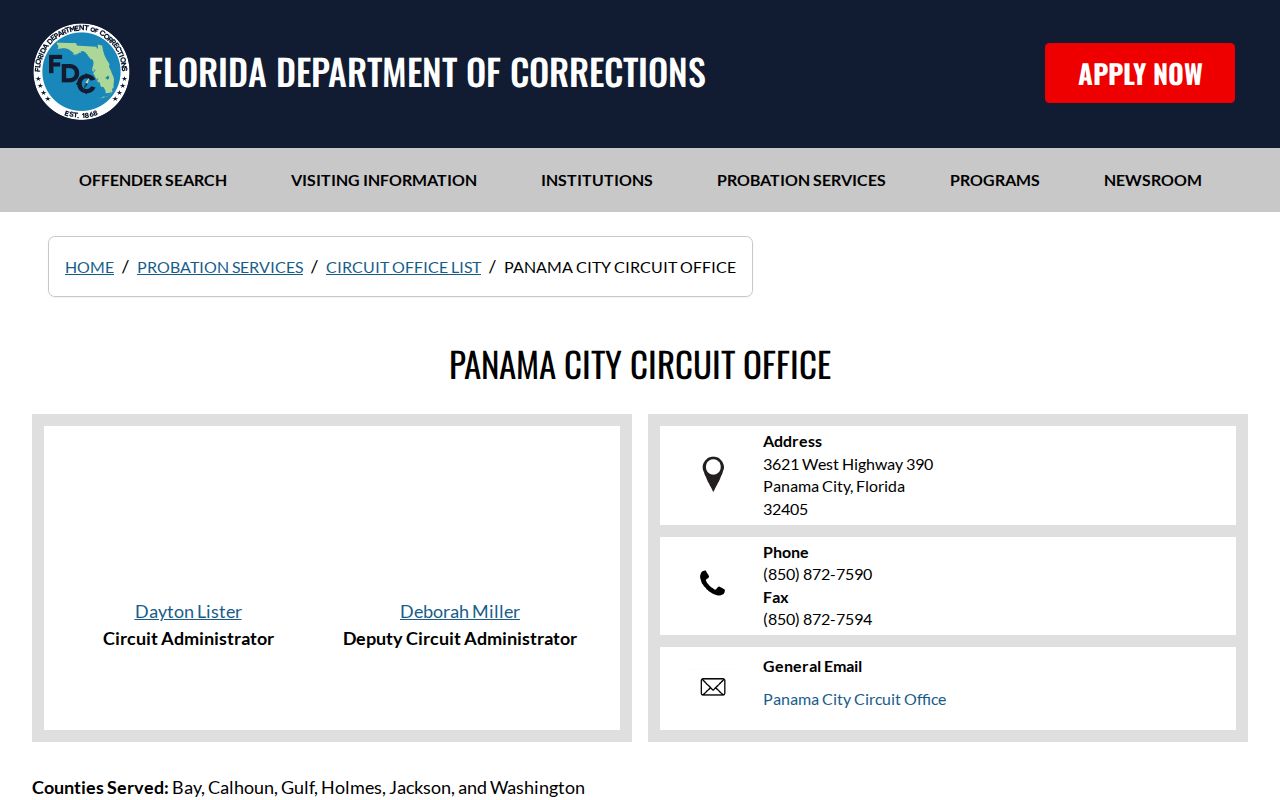
The office listing is the durable route for state supervision, while county probation remains tied to the Calhoun court order.
Calhoun Absconder and Warrant Status
An absconder status means the supervising system reports that a person is not meeting required reporting duties or cannot be located through supervision channels. It is not a new conviction. It also does not prove the supervision term ended. The exact FDC label, date, and case context should be preserved when recording the result.
Use the FDC Absconder/Fugitive Information Search for state-supervised cases. The Calhoun County Sheriff’s Office did not expose a complete searchable county absconder list during research. A violation may also appear in the Clerk docket after court filing. CCSO’s Civil Process/Warrant division lists the Historic Calhoun County Courthouse at 20776 Central Avenue East, 850-674-5049, and weekday hours from 8:00 a.m. to 4:00 p.m. Central, excluding legal holidays.
The FDC search interface provides the statewide status route for applicable Calhoun supervision records.
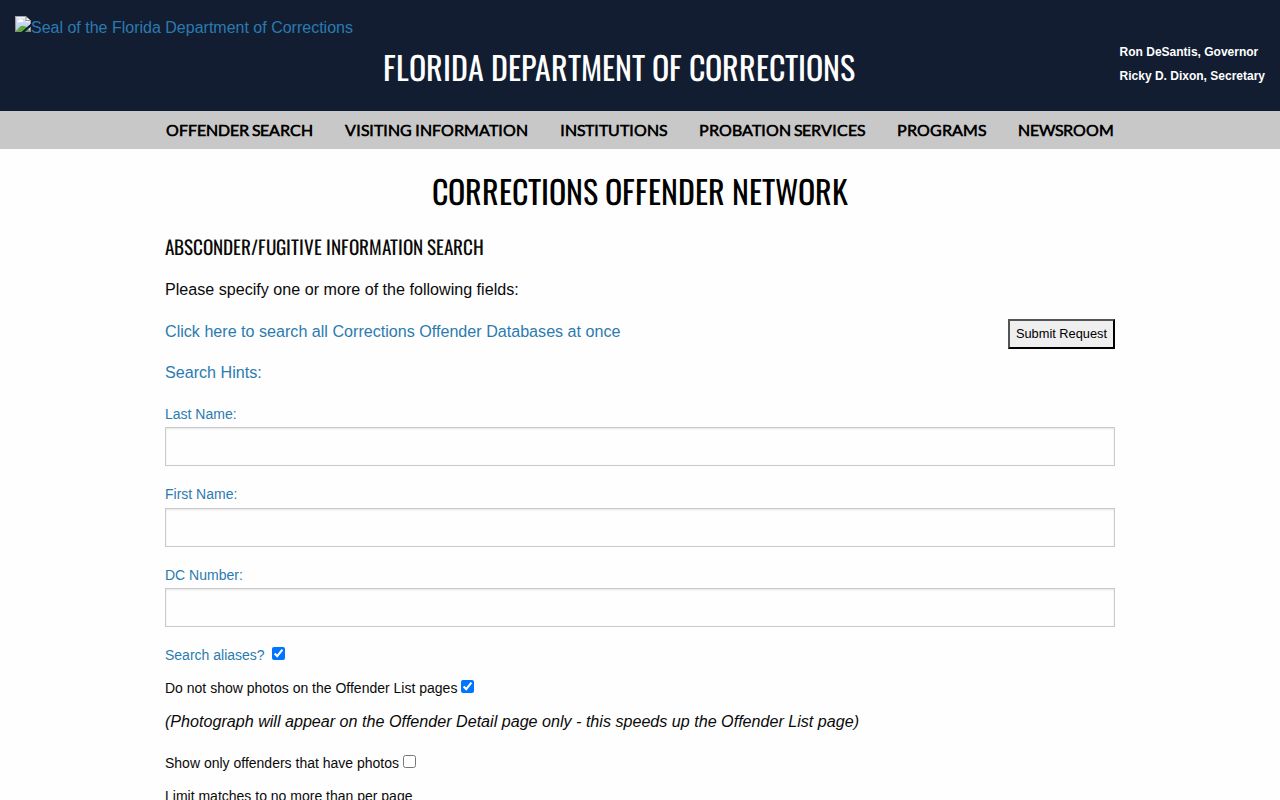
A result should be verified through FDC or the assigned office before drawing a conclusion about current legal status.
Calhoun Parole Decision Records
FCOR handles parole and other commission-controlled release matters. Its Commission Voting Schedule is a rolling calendar with dated agendas. An agenda can identify a name, DC number, county, offense, case, and action category. It shows what is scheduled, not the final result. Most people sentenced under modern Florida law are not eligible for traditional parole.
For a true outcome, request the Commission action, final order, vote record, presumptive parole release date action, effective parole release date action, denial, deferral, rescission, or revocation order from FCOR Public Records. Supply the name, DC number, and hearing date. Florida Statute section 947.16 contains the parole-interview eligibility framework and important offense-date limits.
The current schedule provides useful cadence and agenda links.
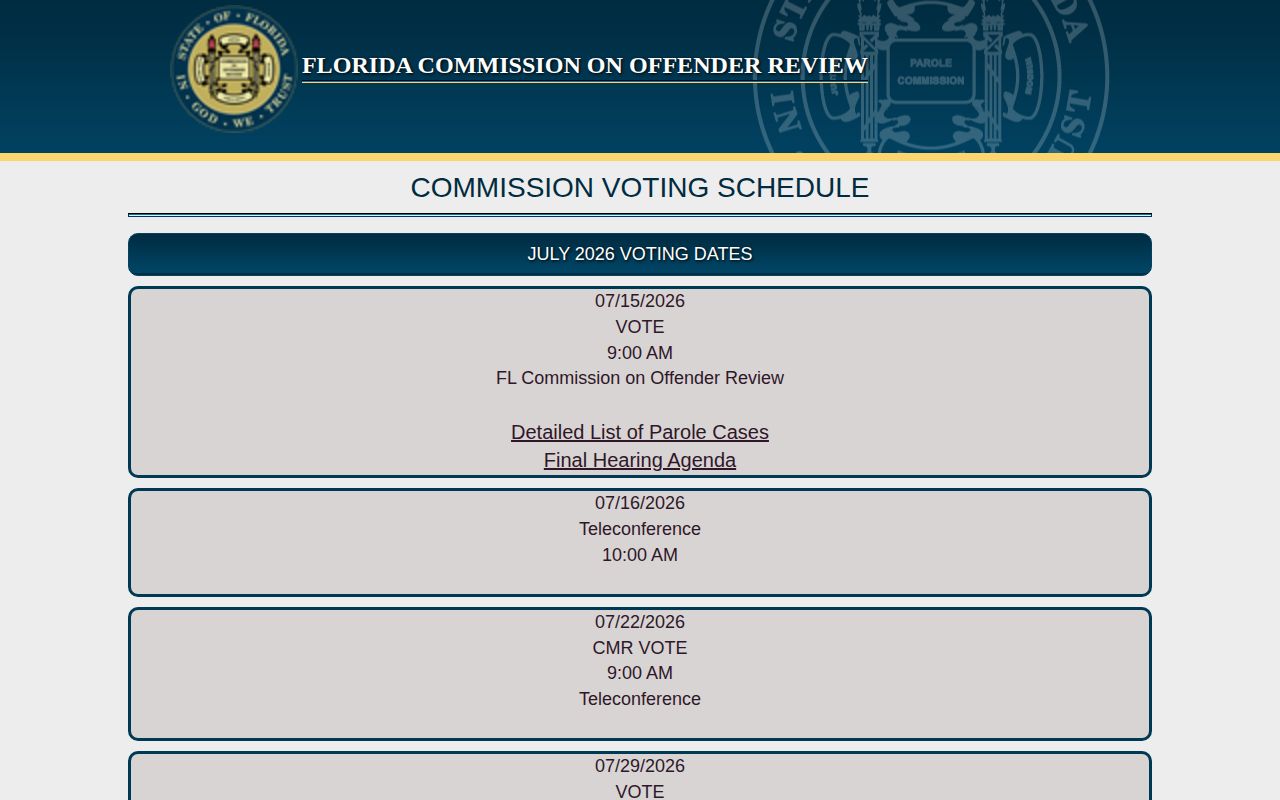
Because a calendar is not a decision database, final release or supervision conclusions must come from the issued action and FDC record.
Note: Traditional parole eligibility depends on offense date, offense, and sentence law, not merely the length of a sentence.
Calhoun Supervision Conditions and Discharge
Conditions come from the controlling order. Common high-level duties may include reporting, following travel limits, completing programs, paying ordered sums, or obeying location and contact terms. The actual terms vary. The supervision order and assigned officer are the correct sources, not a generic list. A violation allegation may lead to an administrative process, a warrant, or a court filing depending on the supervision type.
Supervision ends through a formal discharge, termination, expiration, or other authorized action recorded by the responsible body. Leaving prison is not discharge. Reaching a listed end date also does not prove completion if a violation, tolling event, or later order changed the term. Recheck the current FDC status, supervision history, and court docket. For parole or conditional-release matters, obtain the FCOR action when the outcome is important.
Florida VINE may provide covered custody and status notifications, but it is not the archival supervision record. A person in the community can remain supervised without appearing in a county jail roster. This custody-to-supervision chain is the useful sequence: facility release, supervision start, office assignment, status changes, then formal discharge.
Calhoun State Release Identification
Florida law adds a practical detail for some state-prison releases. Under section 944.605, FDC coordinates identification documents for qualifying people released at sentence expiration. For a Florida-born inmate, that can include a certified birth certificate and state identification card, subject to the statute’s exceptions. The law also addresses help with Social Security or out-of-state identity documents.
This rule can apply to a person leaving Calhoun Correctional Institution. It does not automatically govern a short stay at Calhoun County Jail. The same statute requires an FDC release photograph before an anticipated state release, which is separate from a county booking photograph. These documents help with release processing, but they do not identify the supervising office. The offender record and release order still control that assignment.
Note: State-prison identification duties and county-jail property release are separate processes handled by different custodians.